
An AI for prior authorization brings results in minutes. But what happens when clinical evidence sits in the EHR, eligibility lives in another system, payer rules live elsewhere, and a clinician still needs to step in for an exception? AI agents are fast, but if the workflow is broken, the system fails.
Prior authorization consumes an average of 13 hours of physician and staff time each week, and two in five physicians (40%) employ staff dedicated exclusively to prior authorization tasks.
This is where Mastek’s roles begin. AI agents aren't here to simply summarize information or point you to the next step. They can and should gather context, initiate actions, move work between systems, monitor what happens next, and escalate when human judgment is required.
Bridging the huge workflow gap and latency between payer and provider operations.
For organizations exploring broader healthcare technology and AI transformation, how do they actually help?
AI Agents in The Workflow
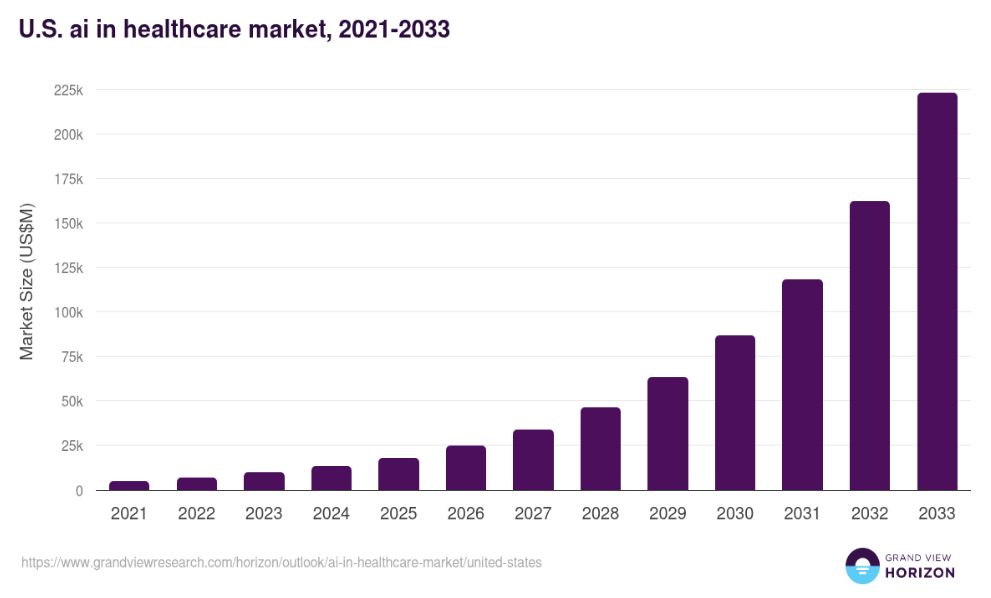
source
There are segments and sections in healthcare workflow automation services that can be a matter of life or death, and so whether you are skeptical or not, healthcare is getting automated.
More than half of clinicians (54%) want AI to streamline visit notes and medical billing, with 48% citing insurance prior authorization as the primary workflow they are ready to delegate.
So how do AI agents fit into the traditional workflow and fragmented data we have?
The difference with AI agents is that they can potentially take responsibility for multiple steps within a workflow rather than waiting for a human to initiate each one.
Take Prior Authorization, for instance.
The clinical decision is just the tip of the iceberg; someone still has to:
1. Collect documentation
2. Verify information
3. Match evidence to policy
4. Prepare the submission
5. Track its status
6. Respond to missing information
7. Route exceptions.
An AI agent can take on much of that administrative work while keeping clinicians involved when medical judgment is required.
The impact can be substantial. For example, for Cone Health, prior-authorization preparation fell from 45 minutes to three minutes. Mastek and Innovaccer combined Galaxy UM's AI-powered utilization management automation with Mastek's deep payer implementation, integration, and managed services expertise to deliver faster, more efficient, and compliant UM operations
But the lesson is not simply that “AI” makes prior authorization faster; it’s the right one that makes the whole process better.
For an agent to complete the work, it needs the right clinical context, policy information, system access, workflow rules, and escalation path.
Without those pieces, AI simply arrives at the bottleneck faster.
Utilizing data for Payer Efficiency
Payer operations contain countless workflows where skilled people spend time gathering information rather than making decisions.
That is where agents become interesting.
In Utilization Management, agents can help assemble evidence, progress qualifying requests, communicate status, and escalate cases requiring clinical judgment.
In Quality Management, an agent could do more than identify a care gap. It could help prioritize the member, initiate the appropriate outreach, support the next action, and escalate cases that require intervention.
In Risk Adjustment, agents can help bring together the information needed to identify documentation gaps and support review, but only when claims and clinical data create a reliable member picture.
In Member Engagement, they can support repetitive service workflows while giving human agents better context when an interaction needs judgment or empathy.
The opportunity is not to remove people from payer operations.
It is to stop consuming human capacity on work that does not require human judgment.
And that makes healthcare data interoperability fundamental to agentic AI in healthcare. An agent acting on incomplete or inconsistent member information does not solve fragmentation.
It automates on top of it.
This is also why enterprise AI capabilities have to be considered alongside the surrounding technology estate. Mastek's broader Oracle AI services reflect the same enterprise principle: AI becomes useful when it is embedded into real data, applications, and operating processes rather than deployed as an isolated layer.
For payer organizations, those operational workflows also sit alongside wider systems for member, provider, financial, and distribution operations. Mastek's work across areas such as healthcare integration and payer technology therefore matters because agentic workflows rarely exist inside one application.
Providers Powered by the Right AI agent
Patients do not care whether scheduling, the EHR, CRM, contact center, authorization, and billing run on separate systems. When those systems do not work together, they experience friction.
Consider Patient Access. It is not simply about finding an open slot. The workflow may depend on referral information, specialty, eligibility, provider availability, location, previous interactions, and organizational rules.
An AI agent can help move that request forward. But if it cannot see accurate availability, understand the patient context, or route an exception correctly, it has only automated part of the problem.
The same applies to Revenue Cycle Automation.
Prior authorization, coding, claims, denials, underpayments, and appeals cross clinical and financial systems. Agents can help collect information, identify missing documentation, prepare work, and manage follow-ups.
But no agent can compensate for clinical and financial data that never comes together.
That is why connected healthcare intelligence matters for Providers.
Innovaccer Gravity provides the connected healthcare data and intelligence foundation that brings healthcare data, applications, workflows, and AI together.
Importantly, that does not require providers to replace the technology estate they already depend on. EHRs, CRM, ERP, contact-center systems, and existing data platforms can continue performing the roles they do well.
This is also where Mastek's role becomes important. Through the Mastek and Innovaccer strategic partnership, Innovaccer provides the healthcare platform and AI capabilities, while Mastek integrates those capabilities with the provider's existing systems, data, workflows, and operating environment.
Making Innovaccer Implementation an Enterprise Solution
Selecting an Innovaccer healthcare platform is one decision. Someone still has to determine:
1.Which system owns the authoritative data?
2. How will Innovaccer interact with the EHR or payer platform?
3. What actions can an agent take independently?
4. Where is human approval required?
5. What happens when confidence is low?
6. How are actions traced?
7. Who monitors integrations after go-live?
8. Who owns the workflow when something changes?
This is the role behind the Mastek Innovaccer partnership.
Innovaccer provides healthcare applications, connected intelligence, and healthcare-native AI. Mastek helps make those capabilities work across the wider enterprise through Innovaccer consulting, implementation, integration, data engineering, governance, testing, deployment, and managed operations.
That can include connecting Innovaccer with environments such as Epic, Oracle Health, Meditech, QNXT, HealthEdge HRP, Salesforce Health Cloud, Oracle Financials, and broader cloud and data platforms through HL7, FHIR, APIs, MuleSoft, Boomi, and Azure Integration Services.
Services After Go-Live
Who owns the agent when the pilot team moves on?
Governance must define what the agent can do, where humans intervene, how decisions are traced, and who owns exceptions.
Operations must then keep that design working.
Mastek remains involved beyond implementation through application operations, integration monitoring, incident management, workflow configuration, SLA management, and ongoing optimization, with Mastek serving as the L1/L2 operational interface and Innovaccer supporting L3 platform and product engineering.
That distinction matters.
It means the healthcare organization is not left trying to determine whether an issue belongs to the AI platform, source system, integration layer, or operational workflow.
Because the real test of an AI agent is not whether it performs well in a demo.
It is whether it can still be trusted after its thousandth exception.
AI Agents Driving Healthcare to the Future
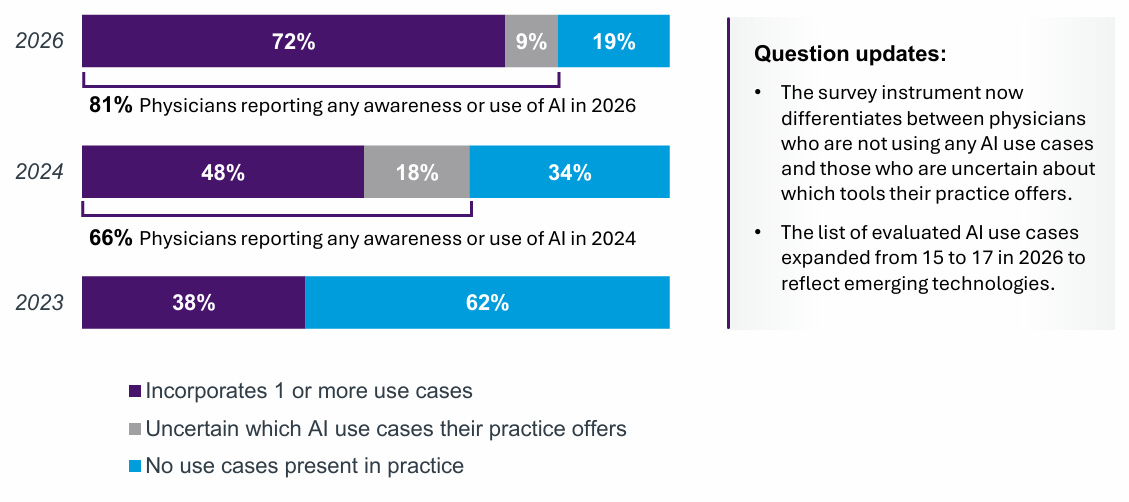
The AMA's 2026 physician survey found that more than 80% of physician respondents now use AI in a professional context, while more than three-quarters say AI provides an advantage in their ability to care for patients.
And the operational opportunity is becoming clearer. NVIDIA's 2026 healthcare AI research found that 52% of payer and provider respondents identified administrative tasks and workflow optimization as leading AI use cases.
AI use cases by Industry segment
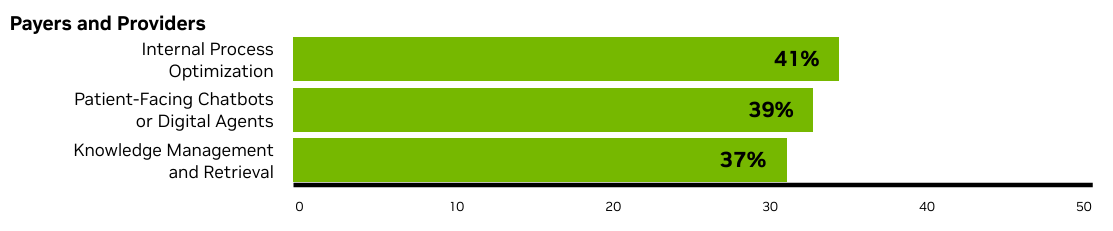
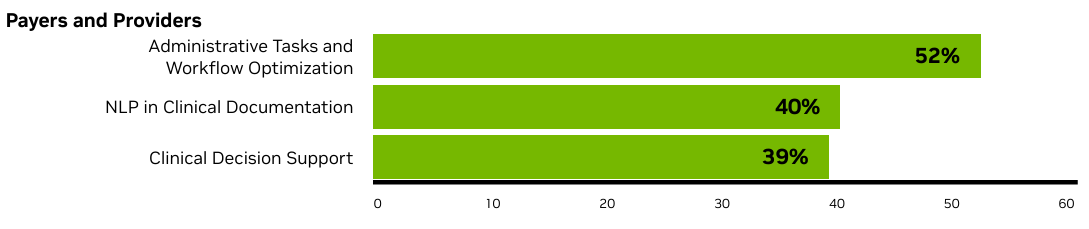
But those numbers do not mean healthcare organizations need more agents everywhere.
The goal is to reduce administrative work, improve patient and member access, protect revenue, strengthen quality, and give healthcare teams more time for the work that actually requires human judgment.
That takes more than an intelligent agent; that takes the right agent.
Upgrade Your Healthcare AI Agents with Mastek→
FAQs
1. How much autonomy should AI agents have in healthcare workflows?
AI should automate repetitive work while preserving human judgment. Mastek helps define the governance, escalation paths, and workflow controls around Innovaccer so organizations can reduce administrative effort without losing accountability.
2. Can AI automate prior authorization without creating more automated denials?
Yes, when automation accelerates evidence gathering, routing, and qualifying approvals while uncertain cases move to clinicians. Mastek integrates Innovaccer with payer systems, EHRs, and policy workflows so the outcome is faster, more defensible Prior Authorization.
3. Can healthcare AI agents work with fragmented data?
Not reliably. Mastek brings together the clinical, claims, financial, and operational data Innovaccer agents need to act with context. The outcome is fewer disconnected workflows and more dependable healthcare automation.
4. What does it take to move healthcare AI agents from pilot to production?
It takes reliable data, integration, workflow design, governance, testing, monitoring, and operational ownership. Mastek brings these layers together around Innovaccer, so AI moves beyond pilots into scalable payer and provider operations.
5. Who is accountable when an AI agent acts inside a healthcare workflow?
Accountability needs to continue after go-live. Mastek can manage L1/L2 operations, integration monitoring, workflow tuning, incidents, and SLAs, while Innovaccer supports L3 platform engineering, giving healthcare organizations clearer ownership in production.